
Fables

The Fable of Aesop and the Runaway Slave
Aesop and the Runaway Slave is one of the oldest Aesopic fables. It’s a controversial one, and you’ll soon see why: it’s a fable about slavery that seems to side with the master, not the slave. It has a valuable moral lesson, though, especially if you aren’t a slave.
The Fable
Aesop came upon a slave who was running away from his master. The slave recognized him and rushed over to recount his many misfortunes.
The slave told of how he had to serve his master elaborate feasts while his stomach gnawed at him. Of how he was forced to accompany his master on long journeys, sleeping in the cold ditch while his master found warm shelter inside. And of how whenever he tired, the master’s whip would renew his vigour.
“If I had done something to deserve this suffering,” the slave said, “I would bare it gladly. But I am innocent! So why must I live this life of hunger and agony? Why must I give the best years of my life to this cruel tyrant?”
Aesop knew well what it was to be a slave. He nodded along sympathetically.
The slave had many more hardships to agonize over, but he decided to cut to the heart of it: “I’ve decided to flee—to go wherever my feet will take me.”
Aesop shook his head. “If this is what you must endure for your innocence, imagine how miserable your life will be when you’re guilty of something!”
The Moral
The moral of Aesop and the Runaway Slave is that you shouldn’t add one problem to another. The same moral is repeated across a few of Aesop’s fables, often with even grimmer endings.
It might sound like a story a master would use to keep his slaves subservient, and it might be. But there’s some context to consider. Aesop was a slave who earned his freedom. Aesop may not have existed, but this fable was first recorded by Phaedrus, a former slave of Emperor Augustus during the first century CE. So, whether the fable belongs to Aesop or Phaedrus, it’s a story told from the perspective of a former slave.
If we set aside the issue of slavery, the moral is a wise one.
Many of us fall victim to a psychological fallacy known as the what-the-hell effect. It’s when something goes wrong, and you proclaim, “To hell with it, then!” and ruin everything.
For example, let’s say you’ve been faithfully following an oppressive diet, but one day, you break it by having an ice-cold glass of crisp Coca-Cola, shooting you over your calorie target. You tell yourself you’ve already blown your diet for the day, so you have a torta, then another, and then a third. When you wake up in the morning, you realize the diet is irreparably broken, so you continue eating junk food. And, of course, you get very fat.
This fable urges you to take another path. Let’s say you make that same initial mistake: you have the refreshing glass of Coca-Cola. But you refuse to add one problem to another. You don’t have the torta. You go back to following your miserably restrictive diet. And you continue losing weight.
For another example, my cuñado has a habit of hurling his video game controller whenever he loses a particularly tense game of Madden. Occasionally, the controller breaks. Once, it crashed into his television, shattering the screen. That didn’t make him feel any better about having lost his game of Madden.
When things go wrong, it’s wiser to make them better, not worse. Don’t cut off your nose to spite your face, jump out of the frying pan into the fire, or add insult to injury. Two wrongs don’t make a right, and neither do three or four.
Anyway, if you liked this fable, you might like some of Aesop’s other lesser-known fables, such as The Wolf and the Lamb, Two Wishes, or The Frogs and the Ox.

The Mongoose & the Farmer’s Wife (Indian Fable)
The Mongoose and the Farmer’s Wife is an old folktale from the Panchatantra, a collection of Indian fables from the 3rd century BCE. It’s a grim story about the danger, or perhaps value, of leaping to conclusions. I’ll explain the meaning at the end.
Read More
The Fable of the Lonely Toucan (Mexican Folktale)
The Fable of the Lonely Toucan is a folktale from the Yucatan Peninsula in Mexico. It’s an Aesopic fable about the hidden self-interest hidden beneath most friendships. I’ll explain the moral at the end.
This is a retelling in my own words.
Read More
The Man Who Never Lied (African Folktale)
The Man Who Never Lied is an old African folktale. It isn’t about lying. Not quite. The moral is far more useful than that. I’ll explain it at the end.
This is a retelling in my own words, but I’ve kept the meaning true to the original.
Read More
The Tale of the Midnight Goat Thief (African Folktale)
The Tale of the Midnight Goat Thief is a Ndebele folktale from Zimbabwe. It’s a dark fable with a grim conclusion, but it teaches an important moral lesson, which I’ll explain at the end.
This is a retelling in my own words. I’ve kept the meaning true to the original.
Read More
Belling the Cat (Medieval Fable)
Belling the Cat, also known as the Council of Mice, is a classic fable often attributed to Aesop. It’s unclear if Aesop really existed, and it’s even less likely he wrote this fable. It’s much more likely to be medieval.
The first record of the fable comes from Odo of Cheriton, a 12th-century English fabulist. The French fabulist Jean de la Fontaine made it even more popular when he included it in his 17th-century book of fables.
This is a retelling in my own words.
Read More
The Boy Who Cried Wolf (Aesop’s Fables)
The Boy Who Cried Wolf is one of Aesop’s most famous fables. It’s been popular for nearly 3,000 years and shows no signs of fading into the mists of time. It’s a dark story with two grim moral lessons, which I’ll explain at the end.
Some retellings soften the ending, attempting to make it more palatable for children. I’ve kept the ending as it was. Aesop’s fables were never meant for children. They’re often brutal. This is one of those.
Read More
The Scorpion & the Turtle (Persian Fable)
The fable of The Scorpion and the Turtle comes from the Anvaar Soheili, a collection of fables from the 15th-century Persian scholar Husayn Kashifi. It’s been largely forgotten, replaced by the darker Russian version, The Scorpion and the Frog.
The moral of the story is strange and layered. What at first seems obvious can be peeled back several times, revealing a dark, festering wound at its centre.
As is tradition, this a retelling in my own words
Read More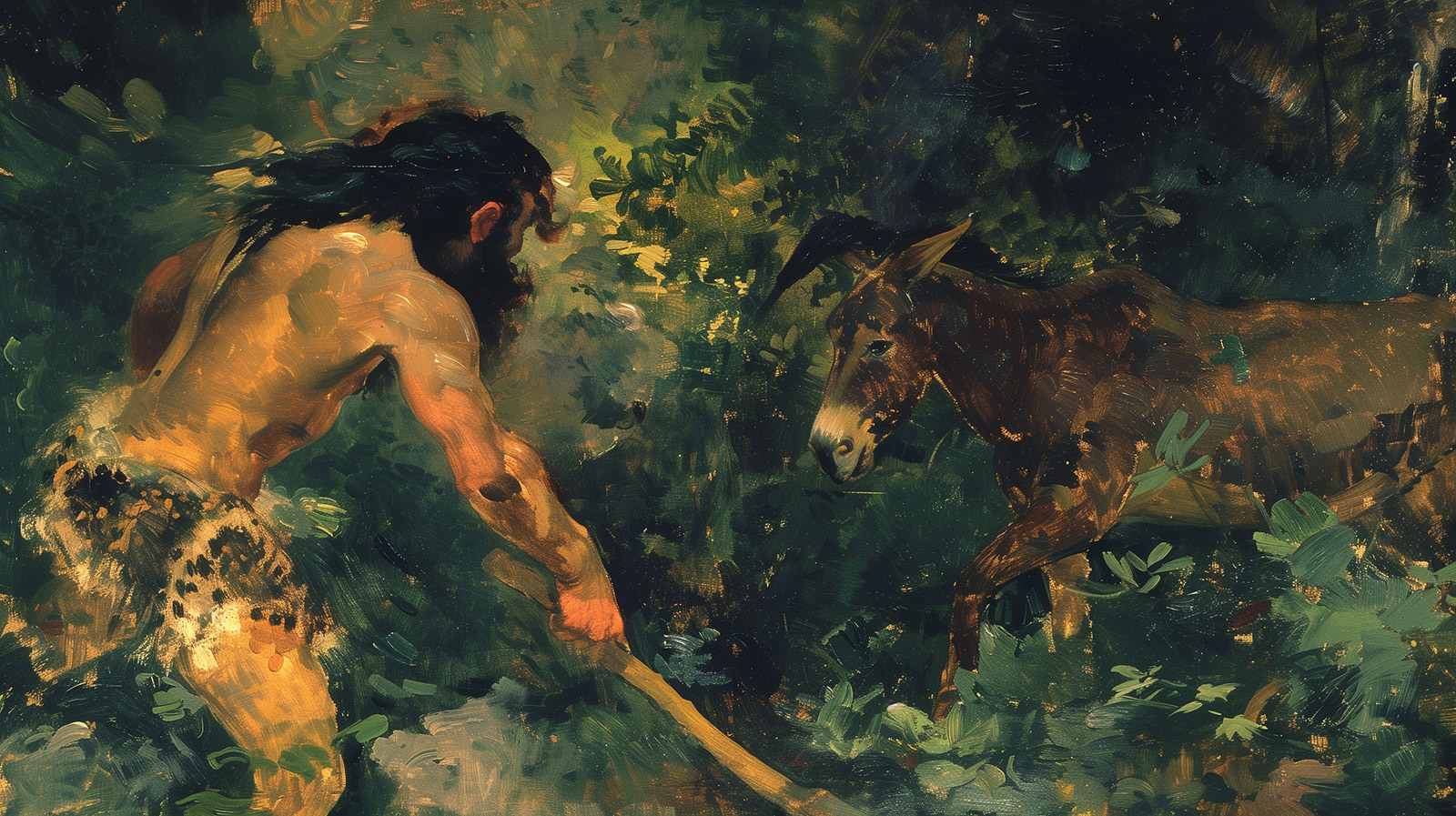
The Donkey and the Onager (Aesopic Fables)
There are two Aesopic fables about a donkey and an onager. The first fable was recorded by Syntipas in the 11th century. The second comes from the French scholar Émile Chambry in 1925. It appears they disagreed with one another about what the moral lesson ought to be, giving us twin fables with opposite endings. They’re best when told together, as I’ve done here.
As is tradition, these are retellings in my own words.
Fable 1: The Donkey, the Onager and the Lion
One evening, an onager (a wild donkey) came upon a donkey standing in a meadow. The onager admired the donkey’s condition, noting his bulging muscles and ample belly.
A little while later, the onager returned, hoping to learn the donkey’s secret. This time, he found the poor beast labouring under a heavy load with a man following along behind, harrying him with a club.
The onager sneered at the donkey, saying, “Lucky me! You rely on your oppressive master to feed you, whereas I roam free through the mountains, grazing where I please!”
But a lion lay in wait in a nearby thicket. It dared not leap upon the donkey, for it feared the master’s club. Instead, it pounced upon the onager.
Fable 1: The Onager, the Donkey and the Driver
Sometime later, another onager wandered down from the hills. She, too, noted how robust the donkey was. She watched with admiration as he carried his great load down the narrow road.
Then she saw the donkey’s master following along behind, brandishing his club. She didn’t like that. She returned to the hills, thinking it better to be free than to carry the burden of prosperity.
The Moral
The moral of the first fable is that the insubordinate are free from both obligation and protection. And so, perhaps it is better to live in service to a community, or in service to a master, both helping and being helped. This is the more ancient moral lesson, first recorded in the 11th century in the Byzantine Empire.
The Byzantine Empire used a system called pronoia, similar to the feudal system in Western Europe. The emperor gave out land to his lords, and those lords had to fight for the emperor. Those lords were also responsible for protecting the peasants who toiled away on their farmland, not so different from the master who harries but protects his donkey.
The moral of the second fable is that prosperity often comes at a great price. Perhaps it is better to be free, even if that means living more humbly. It’s a more modern moral lesson, from France in 1925.
Both fables stand in conflict with one another. That’s why they work so well together.
If you liked this fable, you may also enjoy The Mouse and the Lion.

The Emperor’s New Clothes (Classic Fairy Tale)
The Emperor’s New Clothes is a story by Hans Christian Andersen published in 1837. It is a fairy tale with no magic or perhaps a fable with no animals. Either way, it is remarkable how many moral lessons Andersen was able to embed in such a short story.
As is tradition, this is a retelling in my own words.
The Fairy Tale
A long time ago, in a faraway kingdom, there lived an Emperor who was extremely fond of new clothes. He spent his time changing from one fabulous garment to another, parading around for his subjects to admire.
News of the Emperor’s vanity spread far and wide until it reached the ears of two cunning weavers. Seeing an opportunity, they journeyed to the kingdom, promising they could weave the most magnificent fabric imaginable. The unique quality of this material, they said, was that only the wise could see it.
The Emperor thought this was an excellent opportunity to discover which of his ministers and courtiers were unfit for their positions. He paid the weavers a hefty sum so they could begin their work at once.
After a while, the Emperor sent his most trusted advisors to see how the work was progressing. The weavers invited them to inspect the loom. They all praised the material, expressing admiration for its colours and patterns.
Word of the garment’s beauty quickly spread through the court, and soon the Emperor himself came to see the marvellous garment. He was shocked when he could not see the cloth himself, but he was afraid of appearing foolish, so he lavished praise upon the weavers and their work, expressing his eagerness to wear the finished garments.
On the day of the grand procession, the weavers carefully dressed the Emperor in his new clothes, complimenting his appearance and explaining the intricacies of the designs. The Emperor nodded along, unwilling to admit he couldn’t see any of these supposed wonders.
As the Emperor paraded down the streets, his subjects, who had heard of the cloth’s strange properties, praised the invisible finery, not wanting to appear unwise themselves.
Finally, a small child, too young to understand the pretense everyone was upholding, cried out, “But he hasn’t got anything on!” The child’s innocent words broke the spell, and whispers started spreading among the crowd.
The Emperor heard the murmuring and felt a chill of doubt, but he held his head high. He decided to continue the procession even more majestically. After all, the only thing more magnificent than an emperor’s garments is the Emperor himself.
The Moral
The moral of The Emperor’s New Clothes is that when we try to impress others, we lose sight of what’s actually worth caring about. It’s a common moral. Tolstoy wrote about it, too, using the same analogy:
A rich man goes to a threadmaker to spin some fine (thin) threads. The threadmaker spins the finest threads she can, but they feel too coarse to the rich man, so he asks for even finer ones. She cannot spin finer ones, so she shows the man nothing, explaining how the threads are so fine that they cannot even be seen. The rich man is delighted and pays her a hefty sum of gold.
The Emperor’s New Clothes goes deeper, with a variety of other morals embedded into it:
- Peer pressure can lead us down silly paths.
- The situation gets worse with every lie.
- Our pride blinds us to reality.
- The fear of judgment can silence the truth.
- The popular opinion can be wrong.
- Sometimes, the naive are best able to see the truth.
- We ought to face humiliation with dignity.
These fairy tales with moral lessons are very similar to Jewish and Muslim folktales. Or you might like The Spider King and His Astrologer or perhaps The Man Who Never Lied.
Hans Christian Andersen also wrote the original Little Mermaid fairy tale. And if you like those classic fairy tales, you might like Sleeping Beauty by Charles Perrault.