
Fables
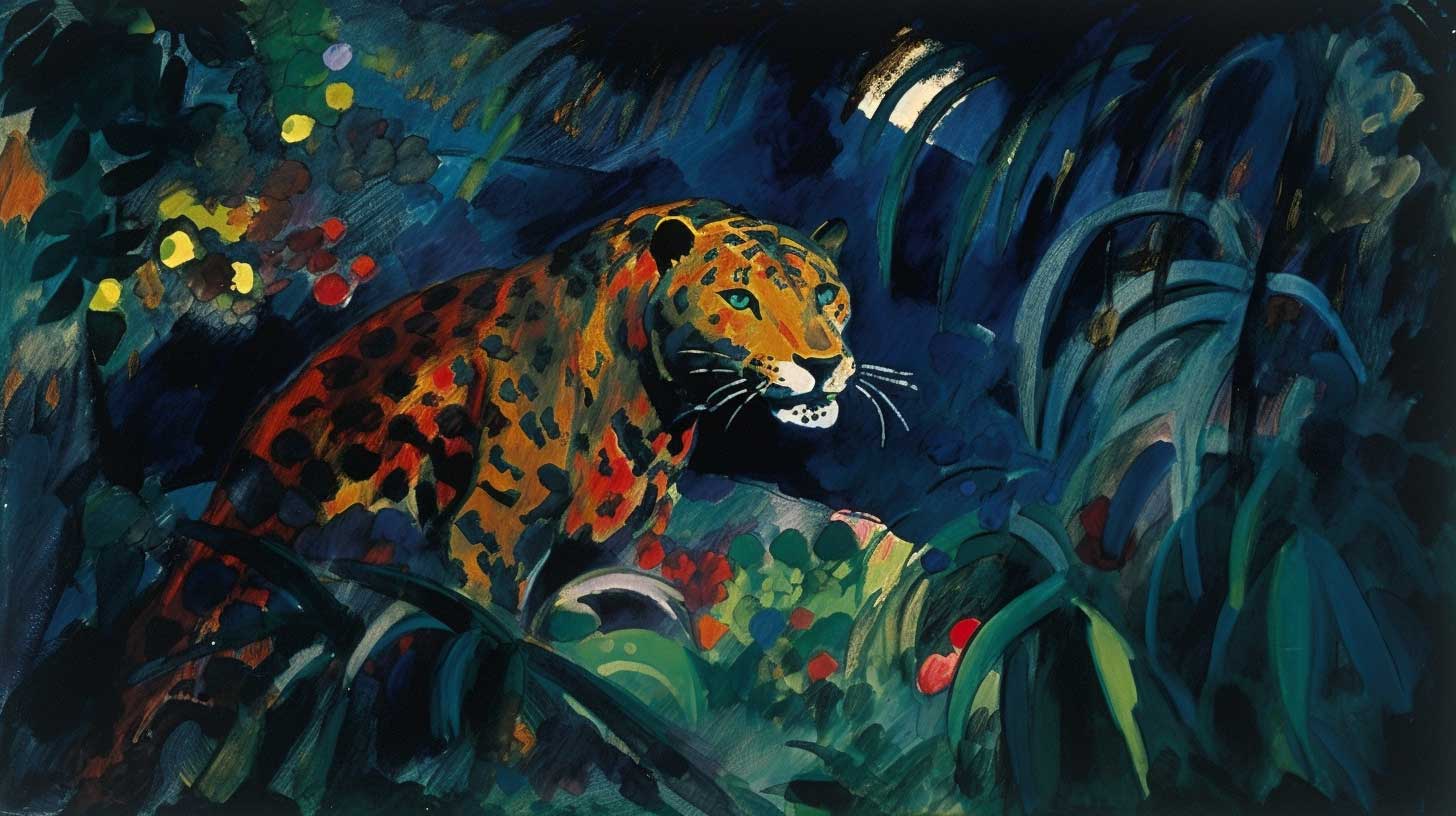
The Fearless Jaguar (A Mexican Fable)
The Fearless Jaguar is a Mexican fable by Juan Artola Miranda, written during his redemption period. Many assume it be a parable about manipulating others by challenging their pride.
In The Old Jungle, in that dark place where the frond canopy hid the sun, there lived a jaguar. He was large, ferocious, and feared by all the other animals. He knew no fear, for he knew none were strong enough to harm him.
One day, as the jaguar prowled through the dense undergrowth, a small rat scurried across his path. The jaguar, amused by the tiny creature’s audacity, toyed with it, forcing the rat to run between his long sharp claws. Having few other options, the rat sank his teeth into the soft skin of the jaguar’s paw.
The jaguar howled, more from surprise than pain. “Ay, little one!” he roared, “you are nearly as brave as I, but with far too little power!”
Reddened with blood and fury, the rat replied, “I am far braver than you, foul king, for you have no bravery whatsoever!”
“No bravery? Bah! I fear nothing!” the jaguar scoffed.
“You have power, yes,” the rat explained. “But bravery is facing one’s fears. If you have no fears to face, you have no bravery.”
The jaguar ate the insolent creature, but it was too late. The rat’s words had already gotten comfortable inside his mind, and no matter what he did, he could not coax them back out.
Determined to prove his bravery, the jaguar went off in search of something to fear. Perhaps he found it. He was never seen again.
The Man Who Cast Himself Away (A Mexican Fable)
The Man Who Cast Himself Away is a Mexican parable by Juan Artola Miranda, written shortly after his disgrace. At first glance, it appears to be a cautionary tale about temptation or perhaps unearned pride stemming from a misplaced value judgment.
Long ago, in a small village by the sea, there lived a woman named Rosalinda who possessed a charm and vitality that enchanted all who met her. Every man dreamed of winning her heart, but it was Raimundo who finally succeeded in marrying her.
The village women gossiped about Rosalinda constantly. They styled their hair like hers, bought their bread at the same bakery, and tried to walk with the same sway of their hips, though they never could get it quite right. Raimundo, too, fell victim to their envy, swatting aside their sweet nothings like so many mosquitoes.
However, Raimundo soon began to wonder, to imagine, to regret. Why settle for a rose that, though beautiful, would one day wilt? Would it not be better to have a fresh bouquet of flowers? And so, he made the heart-wrenching decision to leave Rosalinda.
Rosalinda was devastated, and Raimundo could not console her. He assured her that she would find a new husband, but that only threw her into a fit of rage. His guilt hung heavy upon him.
After a time, the shroud of guilt began to lift. Raimundo remembered the conquests that lay ahead. He emerged from his villa brimming with excitement and confidence. But when he tried flirting with the village women, they had no time for him at all. They were far too busy gossiping about Rosalinda’s handsome new husband.

The Talkative Tortoise (An Old Indian Fable)
The Talkative Tortoise is a famous parable from the Panchatantra, a collection of Indian fables from the 3rd century BCE. This is a translation by Juan Artola Miranda. It is a cautionary tale about the dangers of talking too much.

Once upon a time, in a dense forest near a large lake, a group of animals lived in harmony. Among them was a tortoise named Kachchapa, known for his incessant chatter and relentless interruptions.
One day, Kachchapa was chatting with two geese, Sankata and Vikata, who were visiting the lake. As the conversation went on, the geese grew increasingly tired of Kachchapa’s endless talking. They started to worry his inability to keep quiet might get him into trouble someday.
Sankata, the older of the two geese, said, “Dear friend Kachchapa, we enjoy your company, but you must learn to speak less. Talking too much can lead to misfortune.”
Kachchapa shrugged off the advice, saying, “I appreciate your concern, but I don’t see any harm in being talkative.”
Several weeks passed, and the forest was threatened by a severe drought. The lake began to dry up, and the animals started to panic. The geese decided to migrate to another lake far away, where they could survive the drought. Feeling compassionate for their friend Kachchapa, they decided to help him escape the drought as well.
Sankata and Vikata devised a plan. They found a long, sturdy stick and instructed Kachchapa to hold the stick tightly in his mouth while they held an end in their beaks, carrying him through the air to the distant lake.
“Remember, Kachchapa,” warned Vikata, “you must not speak during our journey, or you will fall to the ground.”
Kachchapa agreed and, as planned, he clenched the stick in his mouth while the geese held onto the ends, lifting him into the air. They soared high above the treetops, heading towards the distant lake.
As they passed over a village, the people below saw a tortoise carried by two geese. They laughed and pointed, amused by this peculiar spectacle. Hearing their laughter and comments, Kachchapa’s pride was hurt, and he forgot the geese’s warning. He opened his mouth to defend himself and speak back to the villagers, and at that moment, he lost his grip on the stick.
Kachchapa fell from the great height, cracking and spilling open like an egg. The geese, heartbroken at the loss of their friend, flew away in silence, lamenting Kachchapa’s inability to heed their advice.
There is another story from this jungle. This one is about three young men, not much more than boys, who thought they were gods.
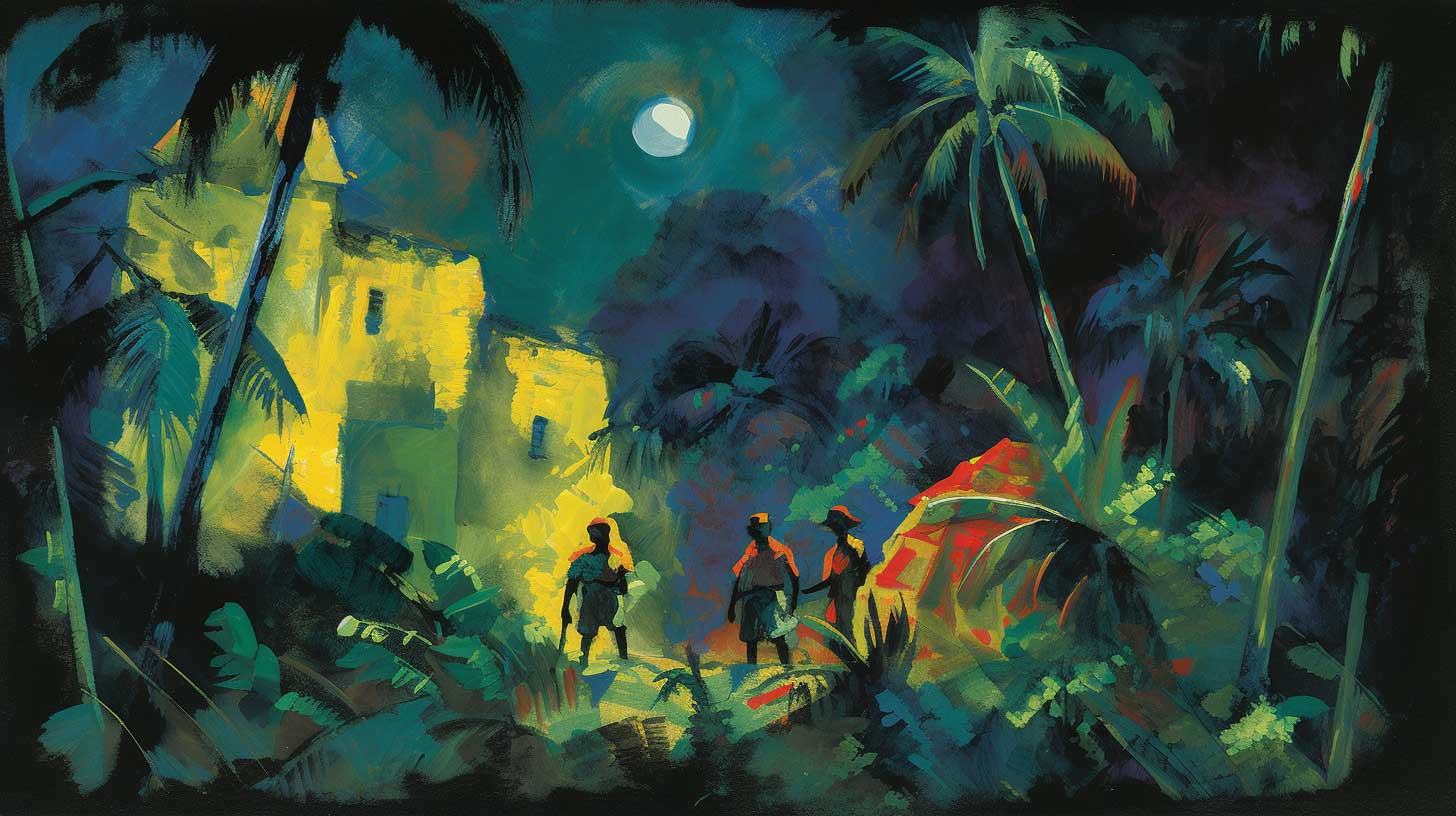
The Complacent & the Thieves (A Mexican Fable)
The Complacent and the Thief is a Mexican parable by Juan Artola Miranda, written not long before his disgrace. It seems to be a cautionary tale about complacency, security, and rationalization.
Long ago, in a faraway city, Aurelio heard a troubling story about a rival who had been robbed. Worried about his own gold, he examined the situation. His unfortunate rival lived in a shadowy part of the city, had a poor reputation, and was said to have associated with characters of ill repute. Aurelio reassured himself. His house sat atop the highest hill, he had a good reputation, and he trusted his friends.
Not long after, word spread of another rival falling victim to robbery. Once again, Aurelio felt a stab of panic. Once more, he sought comfort in logic. Upon closer consideration, the man’s circumstances were quite different from his own. The man’s home had flimsy, decorative doors and no protective walls around his property, making it all too easy for burglars to enter. Aurelio’s sense of calm returned.
Alas, as Aurelio drifted into a peaceful slumber, his home fell under the shadow of a dark cloud. Thieves snuck over his walls, climbed onto his roof, and quietly pried open his patio windows.
His rivals, hearing of the incident the next morning, were at first quite fearful. But upon further reflection, they recalled that Aurelio lived in a veritable fortress. They reasoned that the imposing appearance of his home made him an obvious target for thieves. Their situation was quite different. They were surely safe.
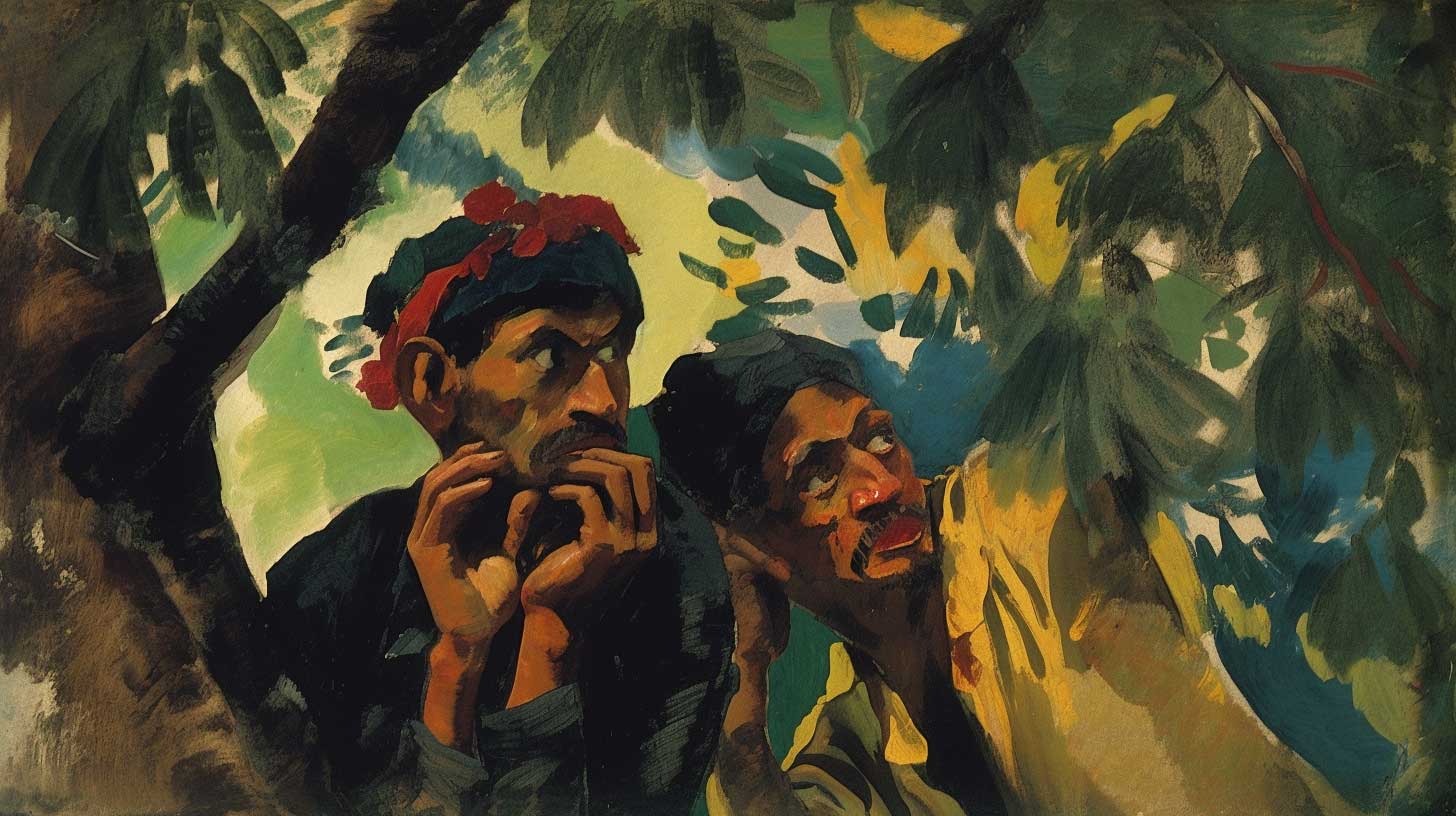
The Horror of Haste (A Mexican Fable)
This is a Mexican fable written by Juan Artola Miranda. It is a parable about patience and haste, or at least that’s how it seems.
Once, in a small village near the edge of a vast jungle, there lived two adventurous young men named Carlos and Marcos. Eager for excitement, they decided one day to venture deep into the heart of the jungle to pick the sweetest and juiciest fruits that grew there. They knew the heavy city gates closed at sunset, but they were confident they would return before then.
As they wandered further into the jungle, the bountiful trees tempted them to pick ever more fruit. Time slipped away unnoticed until they saw the sun hanging heavy and orange in the sky. They tried to hurry back home, but in their haste, they became disoriented and lost their way.
As the sky turned red, they stumbled upon a small, weathered hut where an old man lived. Desperate to return to the village, they asked the old man for directions. The wise old man, sensing their fear, told them that they had just enough time to make it back to the village before the gates closed, but they must walk the entire way.
The young men found this advice peculiar, but the prospect of returning home safely heartened them. So, they began walking. However, as the sun sank lower, their fear grew stronger, and they broke into a jog. Carlos, in his haste, accidentally dropped his basket of fruits. They spent precious minutes picking up the scattered fruits, knowing time was running out.
They resumed their journey, running even faster now. But in their panic, Marcos tripped on a tree root and sprained his ankle. Unable to walk, he leaned on Carlos as they hobbled along. As the sun disappeared beyond the horizon, they found a tall tree to climb, hoping to hide from the dangers of the night.
When they awoke the next morning, feeling sore and stiff but entirely uneaten by dragons, they discovered that a group of crocodiles had gathered around the tree, waiting for them to descend. Unfortunately, the crocodiles were in no hurry at all.
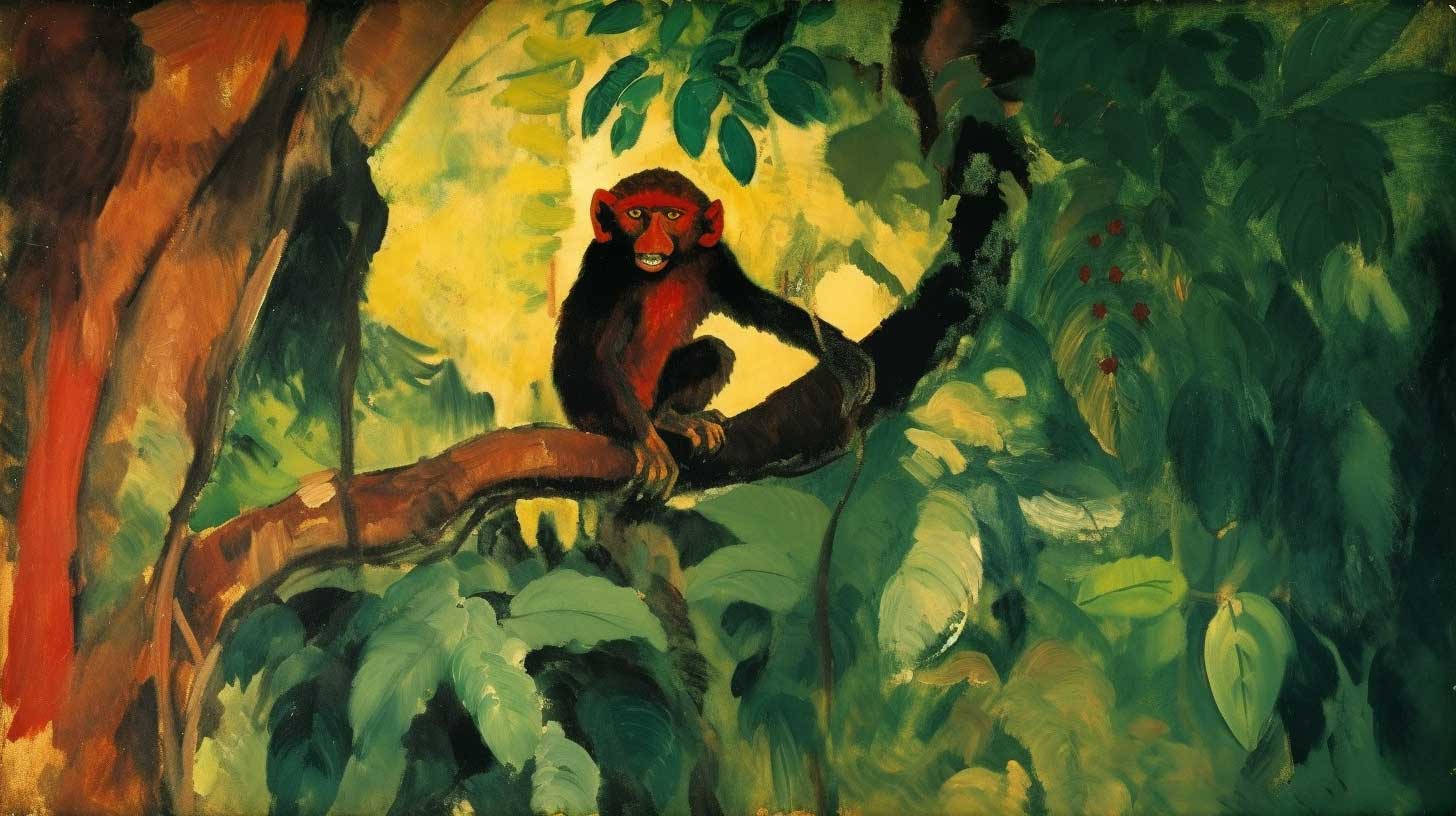
The Monkey & the Crocodile (An Old Indian Fable)
The Monkey and the Crocodile is a famous parable from the Panchatantra, a collection of Indian fables from the 3rd century BCE. It is a cautionary tale about friendship, trust, and intelligence. This is my own retelling, translated into English. The story is much the same.
Once upon a time, in a dense forest near the banks of the great river Ganga, there lived a clever monkey named Raktamukha. High up in a tree, he made his home and spent his days feasting on the sweet fruits that the tree provided. Not far from the riverbank, there was a small island where a cunning crocodile named Karalamukha made his abode.
One day, as Karalamukha was resting on the riverbank, Raktamukha dropped a ripe fruit from his tree. The fruit fell into the river and floated down to where the crocodile was resting. Intrigued by the delicious scent, Karalamukha tasted the fruit and found it to be the most delightful thing he had ever eaten.
Desiring more of the delectable fruit, Karalamukha swam to the tree where Raktamukha lived and said, “Dear Monkey, I have tasted the wonderful fruit that you so generously dropped into the river. I am in awe of its taste, and I wonder if you would be so kind as to share more of it with me.”
Raktamukha was pleased by the crocodile’s politeness and decided to befriend him. He threw more fruits to Karalamukha, who devoured them with great delight. In return, Karalamukha would bring fresh fish from the river for Raktamukha. Thus, the two became fast friends.
As the crocodile’s friendship grew, so did his wife’s jealousy. Why was her husband spending so much time with someone else? Perhaps the monkey was a woman. Perhaps Karalamukha was having an affair.
One day, Karalamukha invited Raktamukha to his home for a feast. “My dear friend,” he said, “my wife has heard of our friendship and the delicious fruits you have shared with me. She would be honored to have you as our guest and prepare a meal for you.”
Raktamukha hesitated, knowing he would have to cross the river to reach the island where the crocodile lived. He said, “Dear friend, I am delighted by your invitation, but I cannot swim. How can I reach your home on the island?”
“No worries,” replied Karalamukha, “I shall carry you on my back across the river. You may hold onto my strong tail for support, and I will ensure that you arrive safely.”
Trusting his friend, Raktamukha climbed onto the crocodile’s back, and they began their journey across the river. As they reached the middle of the river, Karalamukha suddenly spoke, “My friend, I must confess something. My wife not only wishes to meet you but also desires to taste the heart of the one who eats these delicious fruits. She believes it must be as sweet as the fruits themselves.”
Raktamukha, startled by this revelation, quickly thought of a plan to save himself. He calmly said, “My dear friend, why didn’t you tell me sooner? I would have gladly brought my heart along for your wife. Alas, it is still hanging in the tree where I live. Let us return so that I may fetch my heart for her.”
Karalamukha, believing Raktamukha’s words, turned around and swam back to the riverbank. As soon as they reached the shore, Raktamukha quickly jumped off the crocodile’s back and climbed to safety.
This brings to mind another fable from the Panchatantra. It is the tale of The King and His Parrots.
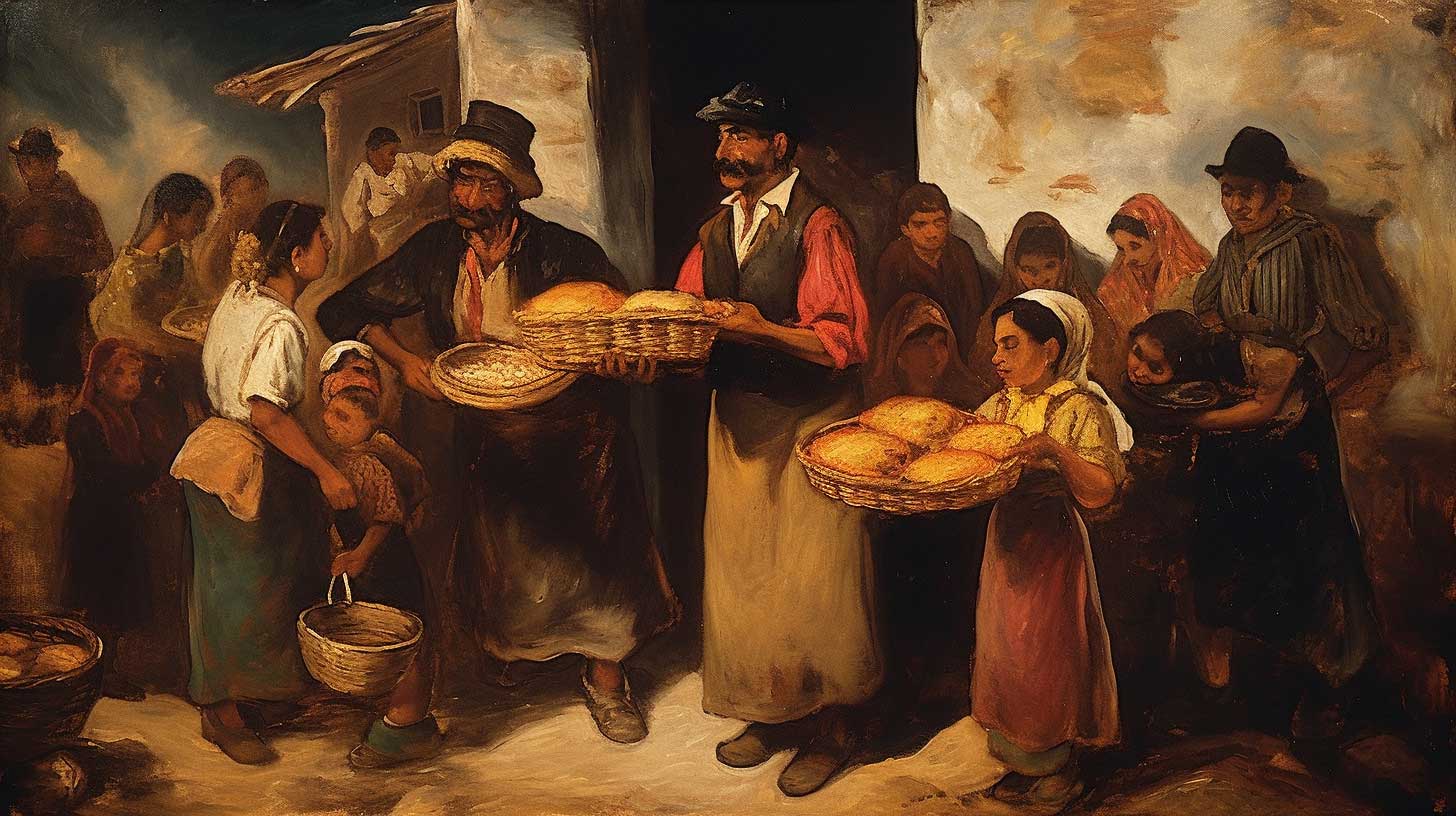
The Balance of the Village (A Mexican Fable)
Here is a Mexican fable written by the disgraced writer Juan Artola Miranda.
In a small village in Hispaniola, there lived a kind-hearted baker named Alejandro. He was known for his generosity, as he always gave away a portion of his bread to the poor and needy. This act of kindness earned him the admiration of the less fortunate, but the wealthy villagers disapproved, claiming it was bad for business and made the poor lazy.
As word of Alejandro’s generosity spread, more and more beggars travelled to the village in search of free bread. Alejandro, committed to helping those in need, continued to give away a portion of his bread. Soon, however, the increased demand began to take its toll. Alejandro could no longer afford the ingredients to make more bread, and his once-thriving bakery fell into disrepair.
The beggars, having grown accustomed to the free bread, became angry with Alejandro, accosting him and yelling at him for not providing for them. The wealthy villagers, on the other hand, were pleased with the turn of events. They felt vindicated, believing that Alejandro’s downfall proved their point about the perils of excessive generosity.
Seeing Alejandro in his destitute state, the wealthy villagers seized the opportunity to assert their power. They offered to fund Alejandro’s bakery, allowing him to continue giving away bread, but only under their patronage. Grateful for the help, Alejandro accepted their offer, and soon the bakery was up and running again.
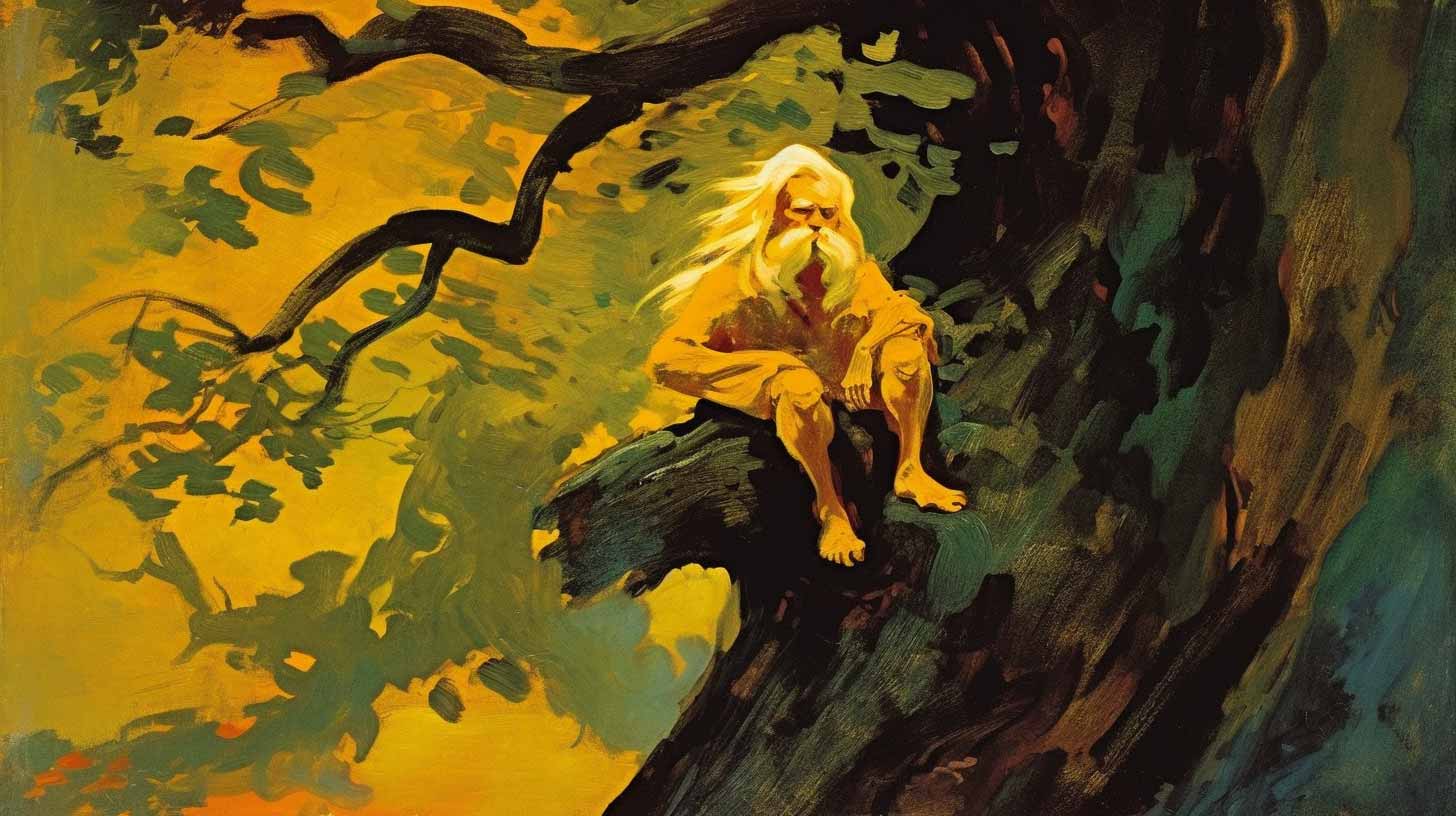
The Viking & The Oak (Norse Fable)
This is a fable written by the disgraced writer Juan Artolla Miranda. It’s a fable about masculine pride.
A long time ago, in a lush, dense forest, there stood a magnificent oak tree. It was tall, strong, and proud, its branches reaching high into the sky. The tree was aware of its beauty and strength, and it never hesitated to brag about it to the other trees in the forest.
“I am the tallest and strongest tree in the entire forest,” the oak tree boasted. “My wood is solid and durable, and my branches stretch wide. I am truly the embodiment of masculine vitality.”
The other trees, smaller and softer, with twisted branches and bent trunks, listened in silence. They couldn’t argue with the hardwood tree’s undeniable splendour.
One day, a shipwright entered the forest, his eyes searching for the perfect tree to fulfill his purpose. He walked past the smaller, twisted trees, paying them no attention. Instead, he was drawn to the proud hardwood tree, marvelling at its height and strength.
The oak tree, filled with pride, believed the shipwright had come to take inspiration from its beauty. But to the tree’s horror, the woodsman raised his sharp axe and began to cut it down. With each powerful swing, the tree felt its life force ebbing away, and it soon fell to the forest floor with a thunderous crash.
The woodsman took the fallen tree and skillfully crafted it into a beautiful Viking longship. The ship’s sturdy frame, made from the oak tree’s strong trunk, carried fearless warriors across the seas, a symbol of masculine vitality and prowess.